
Practical insights from the field of data and analytics
Last updated
Creating dashboards in Power BI
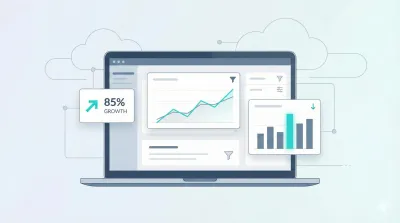
A Power BI dashboard is useful when it shows users the status of key KPIs within seconds while also allowing them to quickly identify the causes of changes using filters, drill-through, and other interactions. In this article, we summarize practical principles for clear data visualization, the recommended structure for management reports, and common mistakes to avoid. We also take a look at the “backend”—how the dashboard fits into the corporate data platform on Azure (Azure SQL, Data Factory, Data Lake/Microsoft Fabric), and how to properly handle publishing, sharing, and security in the Power BI Service.
Data Mesh in Practice: Implementation Using Domains
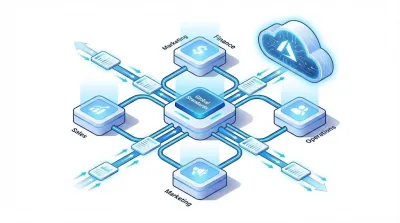
Data Mesh introduces a new way of working with data in large organizations: responsibility for data products shifts from a central team directly to the individual domains that know the data best. This article explains how to set up domain ownership, federated governance, and a self-service data platform in practice, ensuring that decentralization does not undermine unified standards. It also includes specific recommendations for technologies within the Microsoft Azure ecosystem to ensure a scalable and secure implementation.
Customer 360
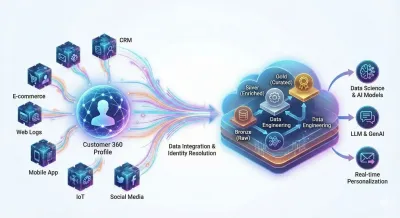
Creating a unified Customer 360 profile is not just a marketing goal, but a complex architectural challenge. This article analyzes the necessary transition to Data Lakehouse architecture in the Microsoft Fabric and Azure ecosystem. Learn how to build a modern data platform that serves as a robust foundation for advanced cloud analytics and hyper-personalized communications using AI and LLM.
Favorites
Multi-agent systems in marketing
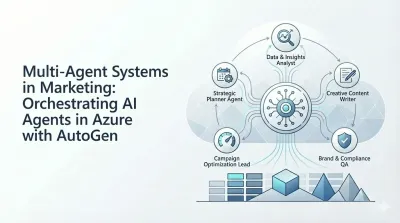
Multi-agent systems are shifting marketing work from one-off text generation to an "AI team" of specialized agents who share roles (planning, analysis, content creation, quality control) and collectively deliver consistent results. When combined with Microsoft Azure and the AutoGen framework, these agent workflows can be securely operated, scaled, and integrated into corporate data and marketing channels. The result is faster campaign preparation, more variants and iterations in less time, better control over tone of voice and compliance, and a higher degree of personalization thanks to working with segments and performance data. At the same time, risks (inconsistencies, latency, costs, debugging) must be managed using shared context, templates, agent QA/“reviews,” and robust logging. The most practical way to start is with 1–2 “low-hanging fruit” scenarios with clear KPIs (e.g., generating campaign variants, virtual focus groups, assisted personalization) and gradually expanding from a POC to production deployment.
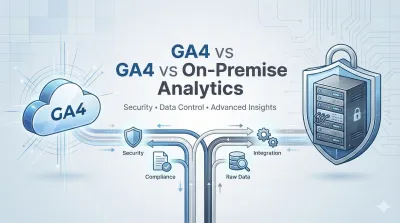
Google Analytics 4 vs. On-Premise Alternatives
The transition to Google Analytics 4 has brought a modern event-based model and rapid deployment, but in enterprise environments it often runs into limitations regarding data sovereignty, security, and the long-term handling of detailed data. This article compares GA4 with on-premise and self-hosted alternatives (e.g., Matomo, Piwik PRO) and explains when it makes sense to choose self-hosting, a hybrid architecture, or a full-fledged enterprise platform. It focuses on controlling data flows, access to raw data, integration into a data warehouse (DWH) or lakehouse, and connectivity to BI, data science, and AI scenarios within a corporate data platform.
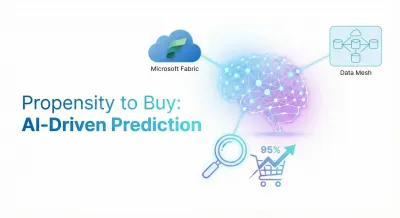
Propensity to Buy
How can raw data be transformed into accurate predictions of purchasing behavior? The Propensity to Buy model represents the gold standard of data monetization, but its success stands or falls on the chosen architecture. In this article, we will explore the technical background of implementation in Microsoft Fabric and Azure environments. Learn how to leverage Data Lakehouse principles, advanced machine learning, and generative AI to identify customers with the highest potential—and how to orchestrate it all in a modern, scalable infrastructure.
Customer 360
Creating a unified Customer 360 profile is not just a marketing goal, but a complex architectural challenge. This article analyzes the necessary transition to Data Lakehouse architecture in the Microsoft Fabric and Azure ecosystem. Learn how to build a modern data platform that serves as a robust foundation for advanced cloud analytics and hyper-personalized communications using AI and LLM.

Synthetic Users and AI Focus Groups
Synthetic users and AI focus groups offer a new way to quickly and scalably validate ideas related to the customer experience without the complex logistics of traditional research. Digital personas based on modern language models enable you to simulate how different segments react to a product, messaging, pricing, and changes in the customer journey, and to uncover barriers to understanding or trust before implementation. Data Mind’s Agora AI tool brings this approach to life: it “brings your segmentation to life” in the form of personas, leads virtual focus groups on real-world scenarios, and provides structured outputs for CX and product team iterations.
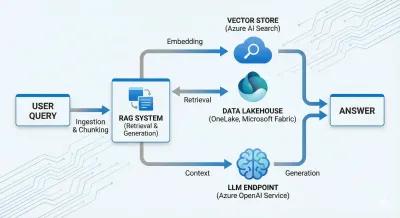
RAG over company data
Want to deploy generative AI on top of your company's own know-how without the risk of hallucinations? This technical deep dive into RAG architecture shows that AI success stands and falls with quality data engineering and data architecture. Explore how to build a modern data platform for AI based on Microsoft Fabric and Azure Data Lakehouse and how to overcome the challenges of data vectorization, security, and transition to a production enterprise environment.